I am the beast-shadow. I am a bridge from Texas to Mexico City, my body is stretched, oppressed, hurt; permanently in transition. It hurts sometimes, but not always. It’s more like a weight in my bones, my skin pulled in two directions, my organs contorted, my hands reaching; my feet grounded.
Gloria Anzaldúa says that the new mestiza carries tension in her body and in her being: this is a key to liberation and new consciousness.
My beast-shadow is afraid of rejection. She wants to assimilate, feels the pressure to conform in order not to be segregated. She wants to control. To control my knowledge, my gender, my sexuality, my body. She is the voice of the colonizer telling me I am not human. She tells me what I should feel and perceive as worthy. My body is a political space. I disobey to achieve liberation.
It is necessary to free my body from this tension in order to have a new possibility of being and existing in this world. The good thing is that disobedience is born in our bodies.
Pigments + arabic gum + oils
-
Soy la bestia-sombra. Soy un puente de Texas a la ciudad de México, mi cuerpo está estirado, oprimido, lastimado; permanente en transición. Duele a veces pero no siempre. Es más como un peso en mis huesos, mi piel jalado en dos direcciones, mis órganos contorsionados, mis manos alcanzando; los pies enraizados.
Gloria Anzaldúa dice que la nueva mestiza tiene tensión en su cuerpo y en su ser: esto es una clave para la liberación y la nueva conciencia.
Mi bestia-sombra tiene miedo al rechazo. Quiere asimilar, siente la presión por someterse a las normas para no ser segregada. Quiere controlar. Controlar mi conocimiento, mi género, mi sexualidad, mi cuerpo. Es la voz del colonizador que me dice que no soy humana. Me dice lo que debo de sentir y percibir como valeroso. Mi cuerpo es un espacio político. Desobedezco para alcanzar la liberación.
Es necesario liberar mi cuerpo de esta tensión para tener una nueva posibilidad de estar y ser en este mundo. Lo bueno es que, la desobediencia, nace en nuestros cuerpos.
Pigmentos + goma arábiga + óleos


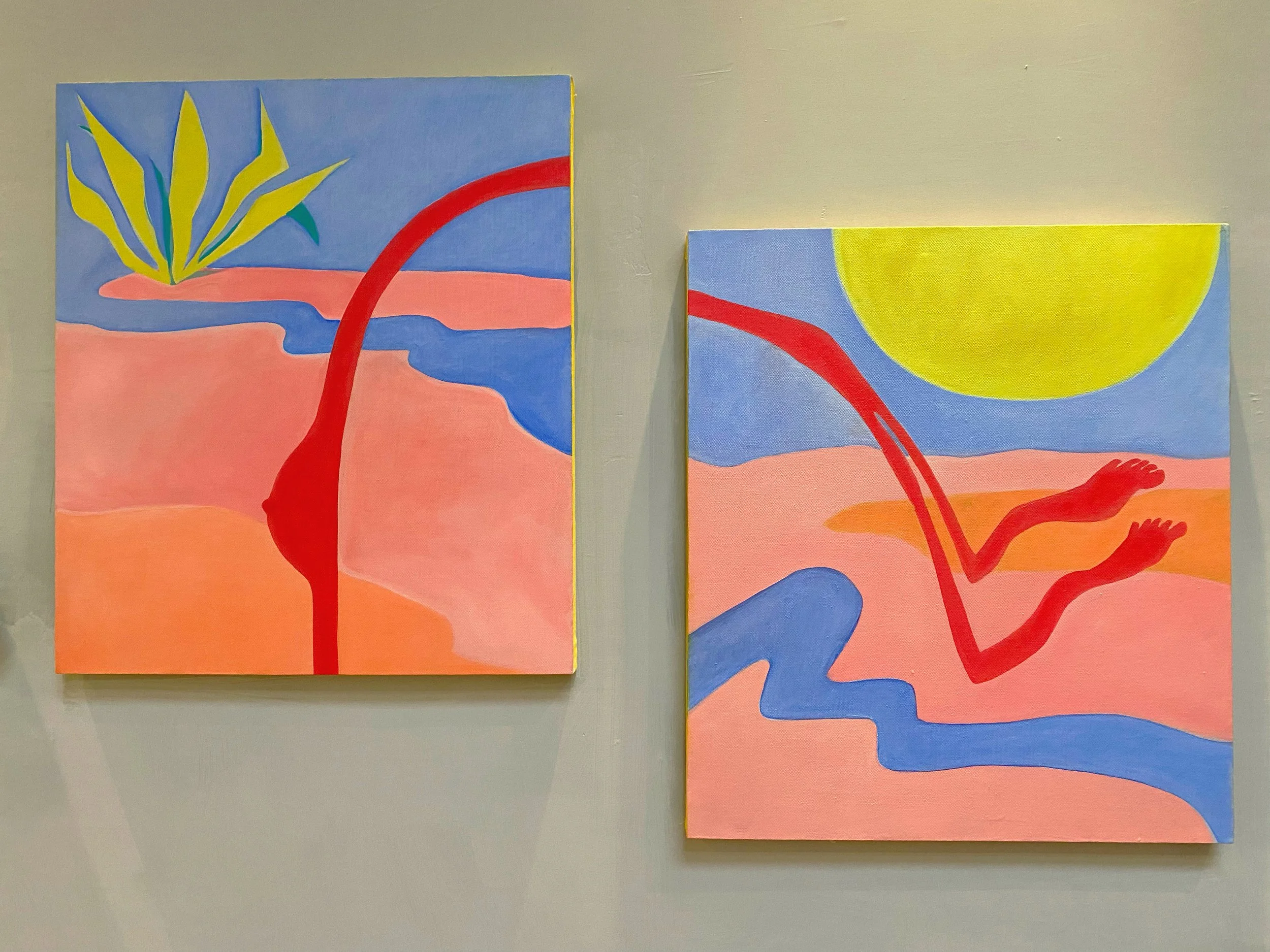

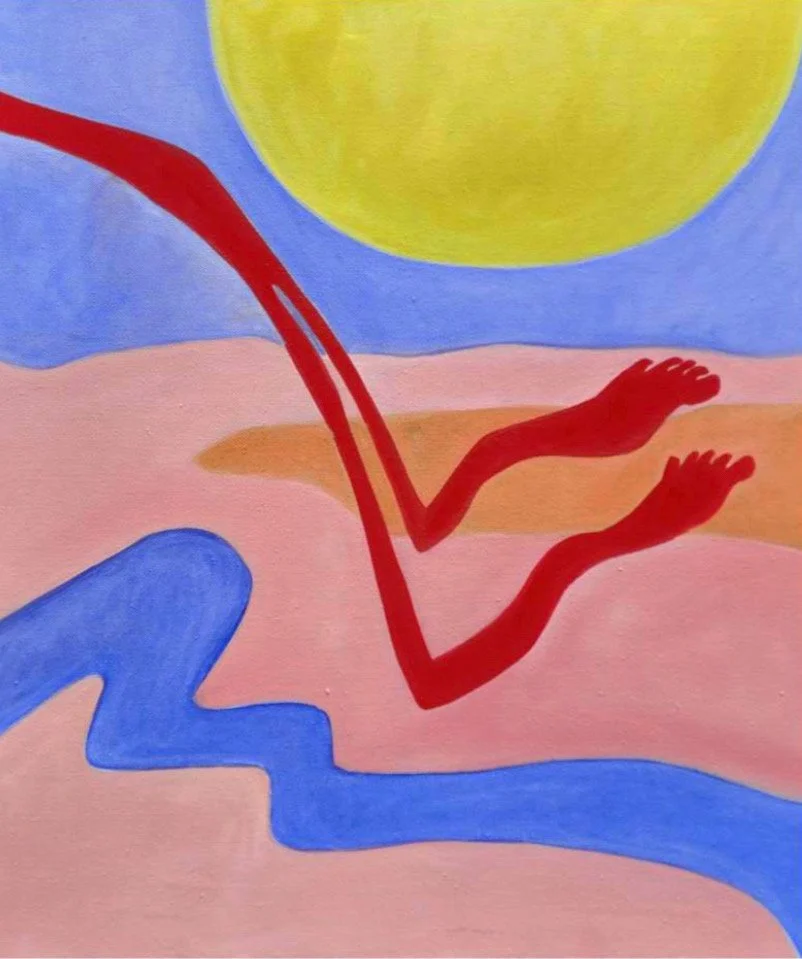
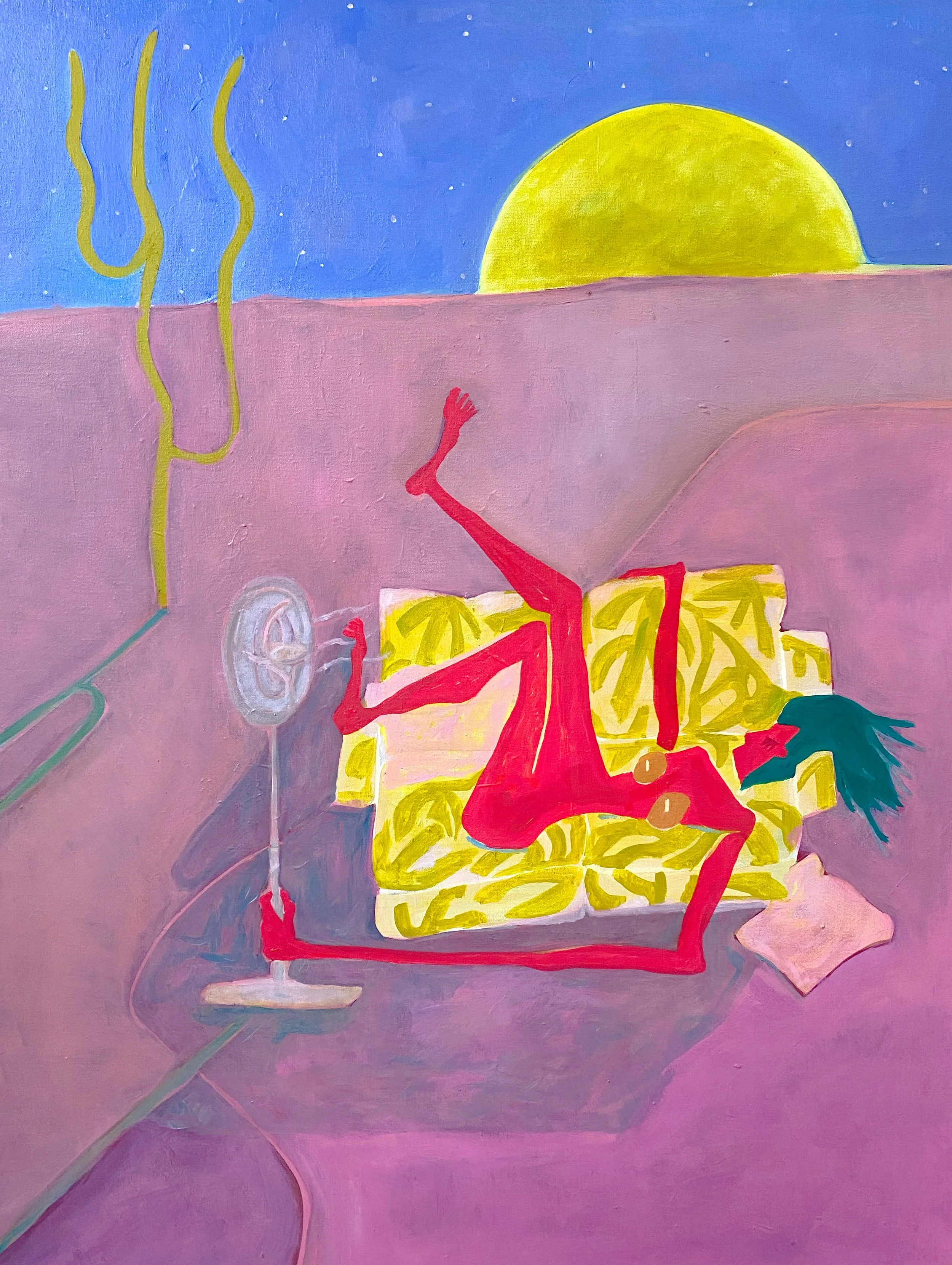

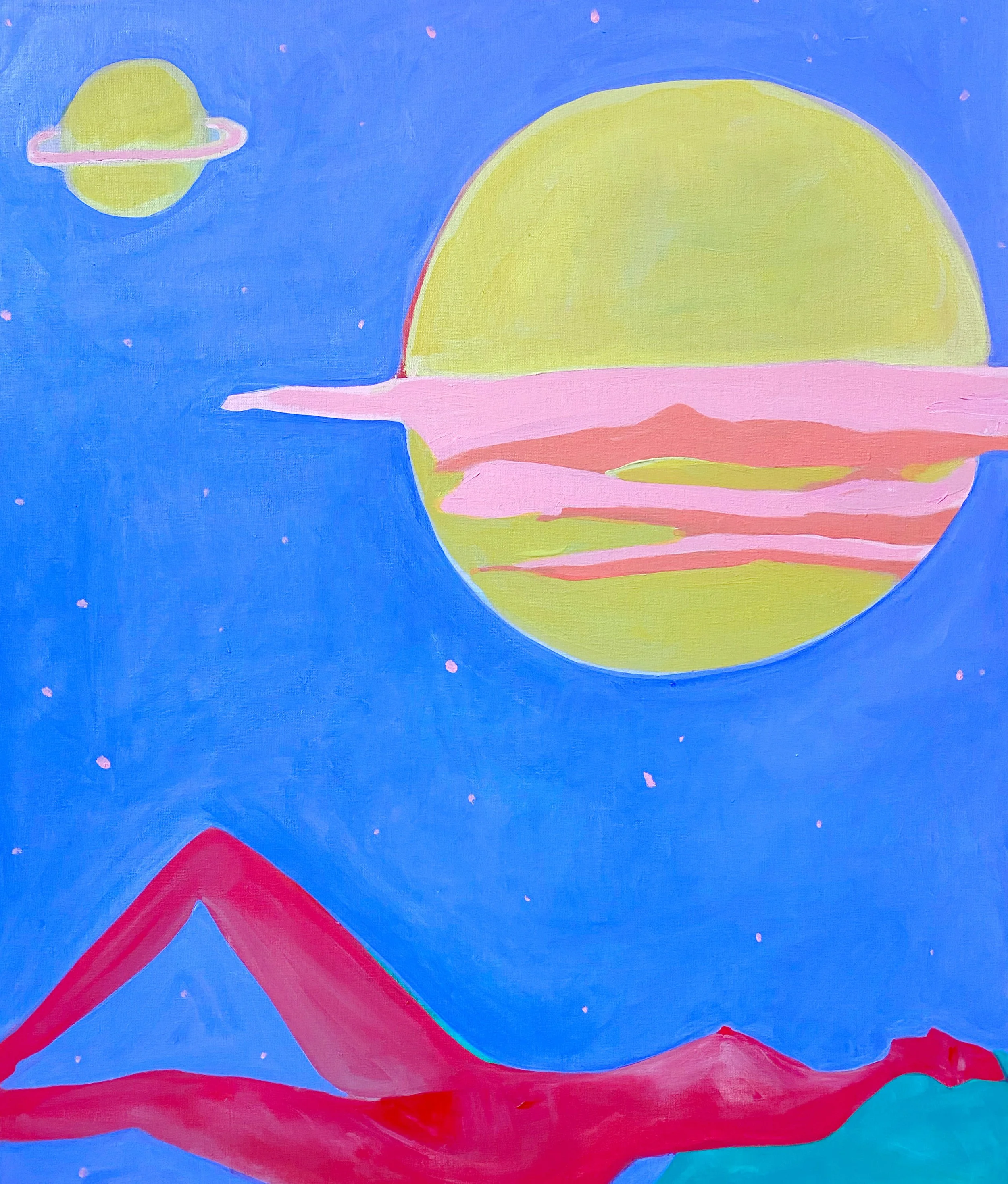
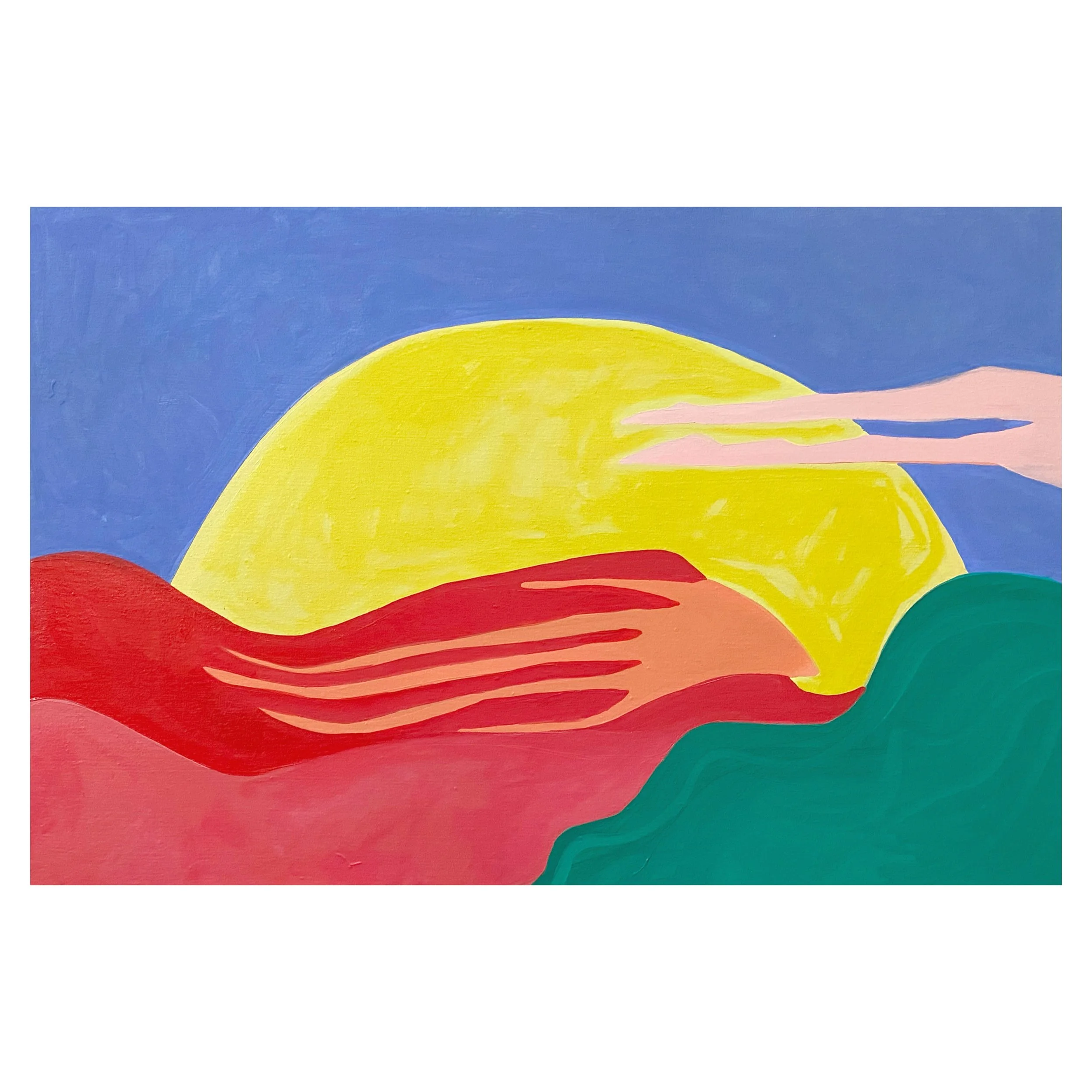
The women in Lisa’s paintings are stretched across the canvas as though pulled by gravity, migration, memory, and land itself. Their limbs elongate, torsos dissolve into terrain, and bodies bend toward abstraction. These are self-portraits, though not in the traditional sense. There is no attempt at likeness, no stable image to pin down. Instead, the work asks a different question: what does it feel like to exist inside a body shaped by cultural tension, inheritance, displacement, and becoming?
Like the artists redefining portraiture beyond the face, Lisa approaches the self as something atmospheric rather than fixed. “how it feels to exist in my body at a particular moment in time.” That sensibility resonates deeply here. The stretched women are emotional and political landscapes, embodiments of living between places, languages, and identities.
Born in Texas and now based in Mexico City, Lisa draws from Chicanx borderland histories and Gloria Anzaldúa’s concept of the “new mestiza,” a figure formed through contradiction and hybridity. Her women appear suspended between worlds: rooted yet pulled apart, resilient yet vulnerable. Often painted with oil and sand or constructed alongside textile works made from ropa de paca, the surfaces themselves carry weight, abrasion, and memory.
The distortions in these figures are not surreal flourishes. They function more like pressure maps. The body expands where history accumulates. It thins where assimilation demands erasure. In many works, the landscape and figure become indistinguishable, suggesting that land itself absorbs migration, labor, grief, and resilience. A hillside folds into a shoulder. A river becomes a spine. The paintings refuse the border between environment and self.
Yet despite their tension, these works are not hopeless. They imagine transformation without resolution. The women continue stretching, reaching, becoming. Lisa’s paintings propose identity not as a fixed portrait but as an ongoing negotiation with place, memory, and future possibility. The result is a body of work that feels less like representation and more like resonance: a visual language for existing in-between.